




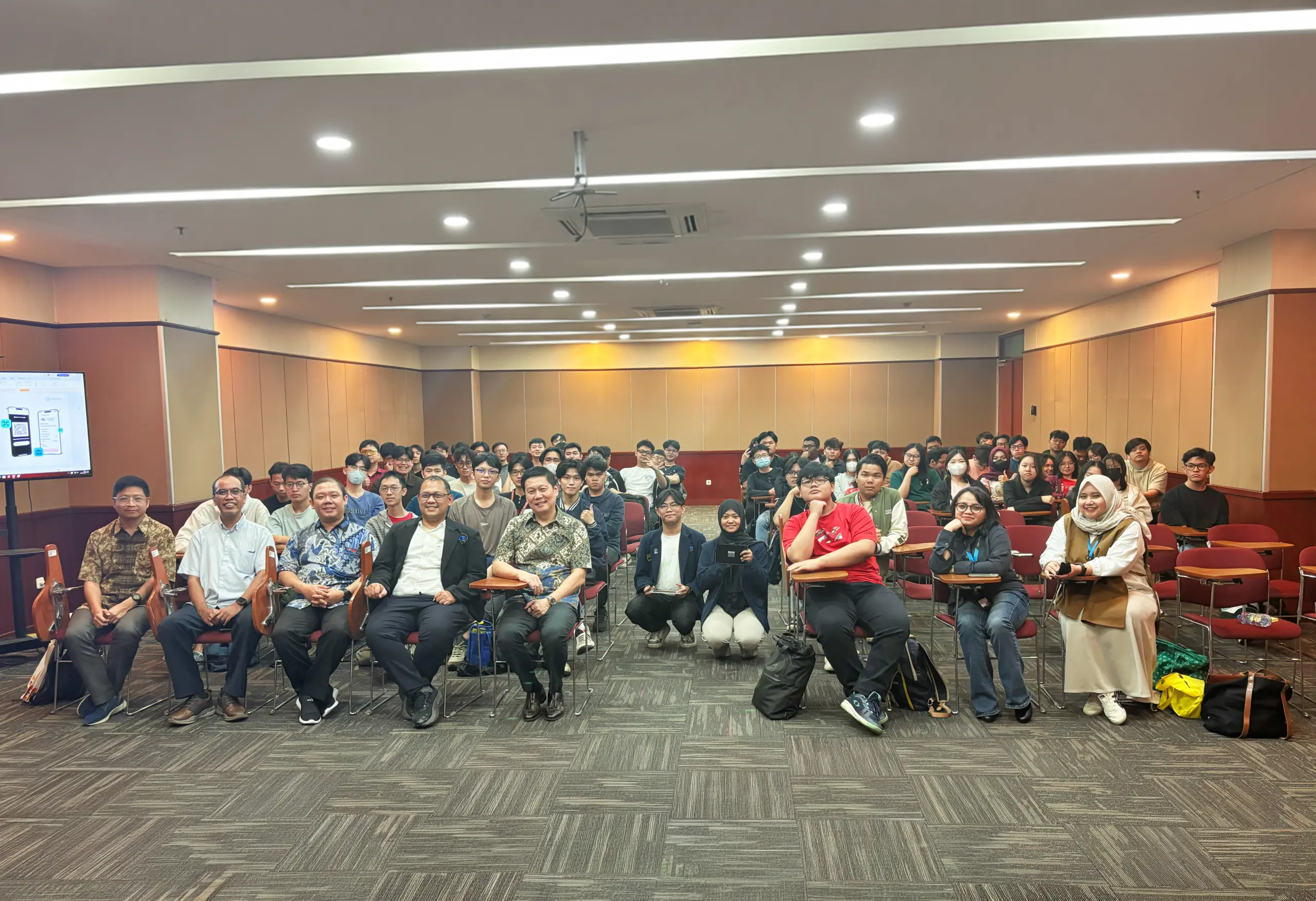
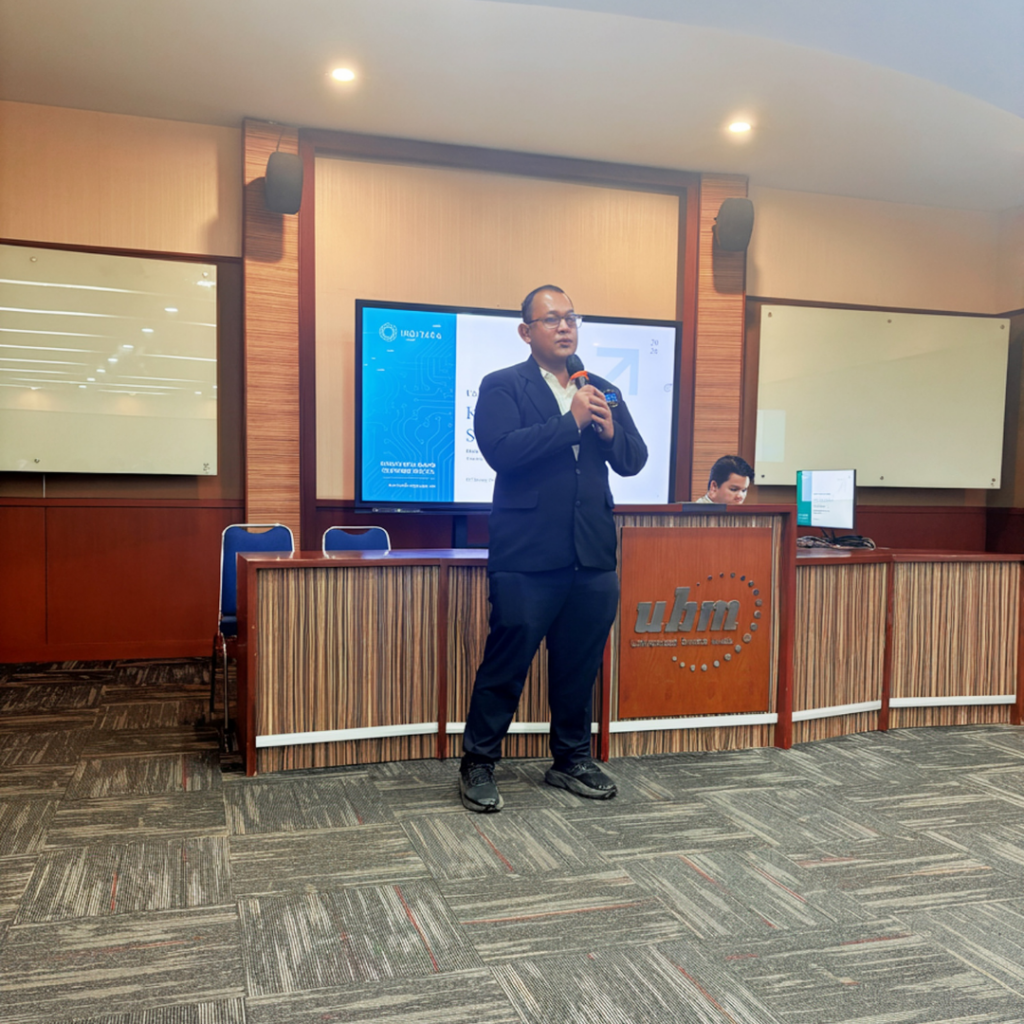
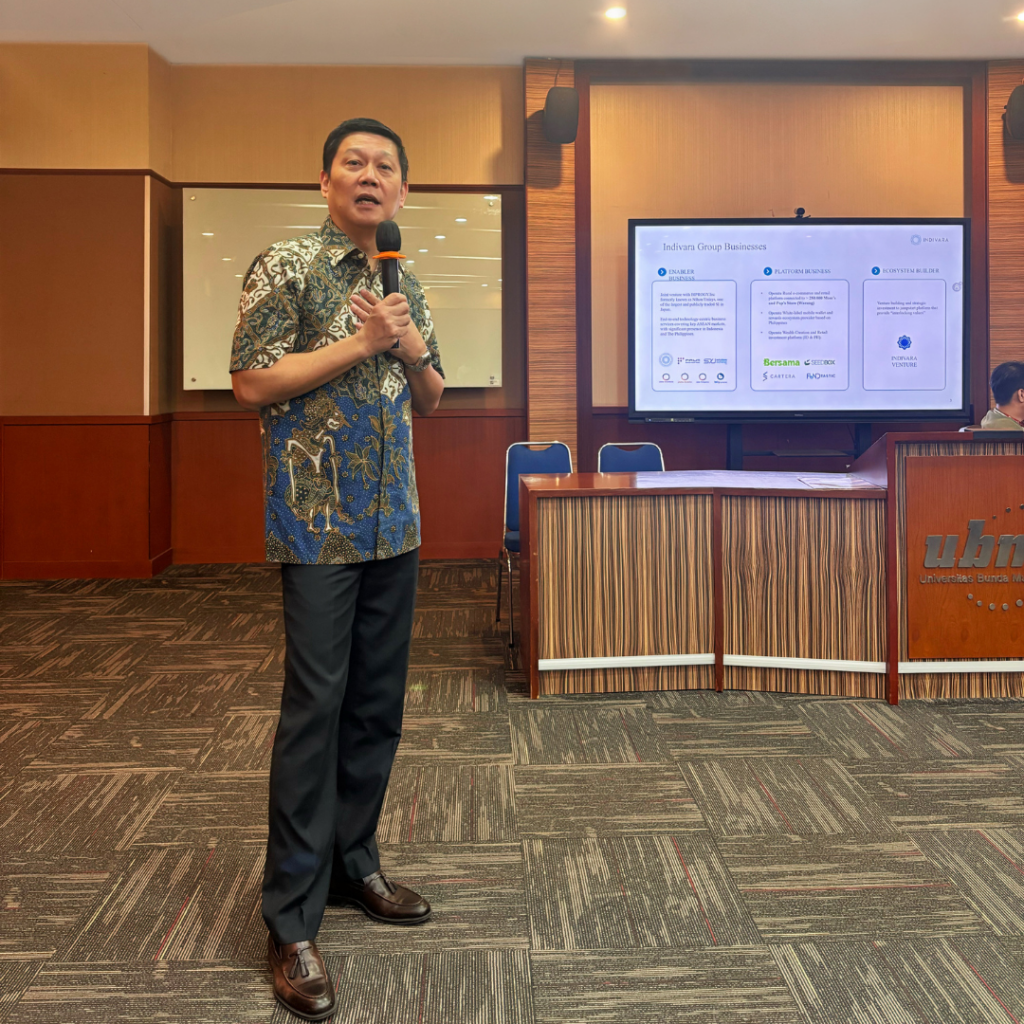
Universitas Bunda Mulia (UBM) recently held a Knowledge Sharing session featuring Jusuf Syariffudin, President and CEO of Indivara Group. With more than three decades of experience building and managing large-scale technology platforms across Southeast Asia, he engaged students from the Information Systems, Informatics Engineering, and Data Science programs in a discussion on how Project Management, Information Systems Service Management, and Data Science operate within real industry and organizational settings.
The Knowledge Sharing session was opened by Dr. Adhiguna Mahendra, S.Kom., M.Sc., Senior Dean of the Faculty of Technology and Design at UBM, who emphasized the importance of industry–academia collaboration in preparing students for real-world technology challenges. In his opening remarks, he highlighted UBM’s commitment to strengthening practical competencies to ensure graduates are ready to contribute to the evolving digital ecosystem.
Throughout the session, these disciplines were connected to a broader objective: learning how to build world-class software. Delivering systems at that standard requires structured project execution, reliable service management practices, and data-driven decision-making. Capability development in these areas forms the foundation for software that performs consistently at scale.
Designing Systems That Can Grow
Building world-class software starts with system design.
Digital platforms handle large numbers of transactions every day. Payments, transfers, and notifications depend on systems that operate accurately and consistently. As usage increases, performance must remain stable.
Students were encouraged to study system architecture, database structure, performance optimization, and security controls. Good design considers growth from the beginning. Clear data flow, structured logic, and proper error handling help systems continue operating under higher demand.
Learning the Discipline of Fundamentals
Pak Jusuf encouraged students to prioritize strong technical foundations. Large-scale systems rely on clear processes, consistent standards, and disciplined implementation. When these elements are in place, systems can grow while remaining stable.
Features and interfaces may evolve, but the underlying structure must remain reliable. Long-term performance depends on how well the fundamentals are implemented.
Connecting Technology and Growth
When organizations grow, system demands also increase. More users create more concurrent activity. Higher transaction volumes increase data processing requirements. Broader usage increases security exposure.
Engineers need to understand how system design affects business operations. Reliable platforms support financial services, commercial activities, and public services. Stable systems allow organizations to expand without operational disruption.
Learning to build world-class software includes understanding responsibility, risk management, and long-term maintenance.
Preparing to Build for ASEAN’s Next Two Decades
“This is your time. ASEAN is the next major economic ecosystem in the world.”
Pak Jusuf pointed to Southeast Asia’s expanding digital economy and young population. He then added a clear timeline: “The next 20 years is your time.”
For the students in the room, the message was direct. The systems built over the next two decades will support millions of people across the region. Preparing to design and manage those systems begins now.
Opportunity requires preparation and skill.
Throughout the discussion, Pak Jusuf returned to a consistent principle: build systems that can scale, remain secure, and continue working as demands increase.
World-class software is defined by reliability, integrity, and long-term performance.
“Learn how to build world-class software. That comes first.”
For the students of Universitas Bunda Mulia, the standard was clear. Strong foundations today will shape the strength of tomorrow’s digital systems.